Practical Daily Journal Recommendations for Regular Writers
Why Your Daily Writing Tool Matters More Than You Think
I have been keeping a journal on and off for over twenty years, and I have learned one hard truth: the notebook you choose affects whether you actually write. A beautiful cover or fancy paper might draw you in, but what keeps you coming back is how the journal feels in your hands, how the ink behaves on the page, and how the size fits your routine. After testing dozens of notebooks, I have settled on a short list of daily journal recommendations that I give to anyone who asks. These are not the only good options out there, but they are the ones that have proven themselves over months of real use.
Before I get into specifics, let me explain what makes a journal work for daily writing. The paper needs to handle your preferred pen without bleeding or feathering. The binding must lie flat so you can write comfortably near the spine. And the size should be portable enough to carry everywhere but large enough to feel like a real page. Those criteria eliminate many popular notebooks right away. But the ones that pass are worth every penny.
Leuchtturm1917: The Reliable Workhorse
If I had to recommend one notebook for someone starting a daily habit, it would be the Leuchtturm1917. The paper is smooth and takes fountain pen ink well, though it does show some ghosting with wet nibs. The numbered pages, table of contents, and two bookmark ribbons make it easy to stay organized. I have filled six of these over the past three years, and every single one has held up to daily abuse, pocket carry, and occasional coffee spills. The 80 gsm paper is a good middle ground, not too thin and not too heavy. For most writers, this is the safest choice among daily journal recommendations.
One thing I have noticed is that the Leuchtturm1917 works especially well with the Lamy Safari fountain pen. The combination of a medium nib and a quick-drying ink like Pelikan 4001 produces clean, readable pages with minimal smudging. If you prefer a ballpoint, the Pilot G2 in 0.7 mm also performs beautifully on this paper.
Moleskine: Familiar but Flawed
People often ask me about Moleskine. I understand the appeal: the classic look, the elastic band closure, the built-in bookmark. But the paper quality has declined over the years. The current 70 gsm paper bleeds with many fountain pens and even some heavier rollerballs. I have tested three different Moleskine notebooks in the last year and found that the ink from a Lamy Safari with a fine nib still bleeds through to the next page. If you use only ballpoint or pencil, Moleskine can work. But for daily writing with a variety of pens, I would steer you toward other options.
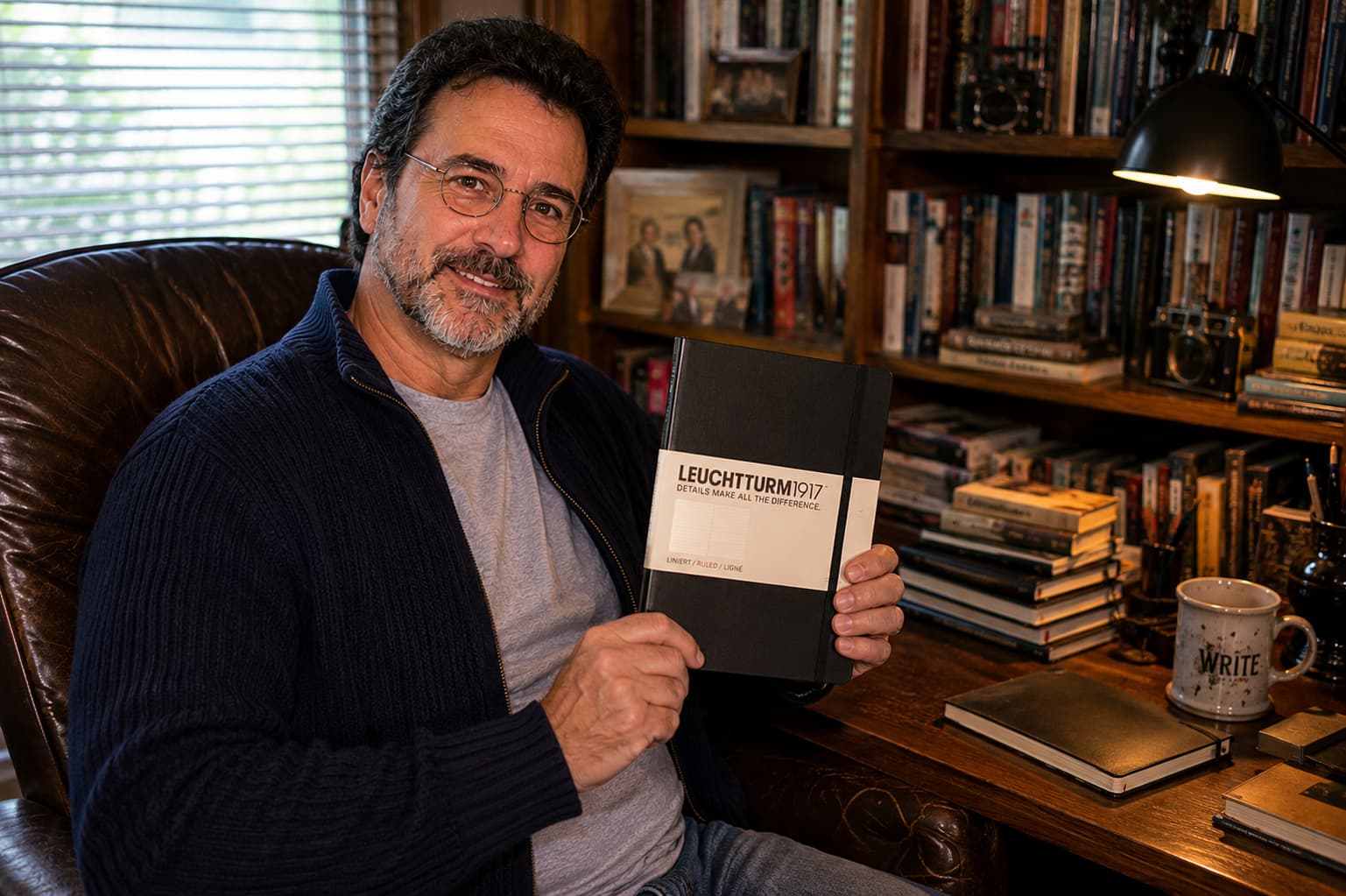
That said, Moleskine still has a place in my rotation. I use one for quick notes and ideas when I am out and about, because the size fits easily in a jacket pocket. But for more reflective daily entries, I reach for something with better paper.
Rhodia and Clairfontaine: The Paper Lover's Choice
Rhodia notebooks use 80 gsm Clairefontaine paper that is coated to resist bleeding. I have used Rhodia pads for years as my go-to for pen testing and daily writing. The paper is smooth, bright white, and handles even wet fountain pens with no feathering. The spiral or staple bindings lay flat, and the micro-perforated sheets tear out cleanly. For writers who use fountain pens exclusively, Rhodia is one of the best daily journal recommendations I can offer.
Clairfontaine makes similar paper in bound notebooks. The Clairfontaine My Essentials range offers a sewn binding that stays open on a desk, which is important if you write for longer sessions. I have a Clairfontaine notebook that I keep on my desk for morning pages, and it has never let me down. The paper is slightly thicker than Rhodia's, so it feels more substantial under the hand.
Tomoe River Paper: The Lightweight Marvel
If you want a notebook that packs a lot of pages without the bulk, look for one using Tomoe River Paper. This paper is famously thin, usually 52 or 68 gsm, yet it handles fountain pen ink better than most thicker papers because of its coating. It shows shading and sheen beautifully, which makes writing feel more like a craft. The Hobonichi Techo uses Tomoe River Paper, and I have kept a Hobonichi as my daily planner for two years. The soft, flexible cover and the thin pages let me carry a full year of entries in a small package.
Nanami Paper also produces notebooks with Tomoe River Paper. Their Seven Seas Writer line is a classic: A5 size, 480 pages, and a lay-flat binding. It is heavy in terms of page count but light in weight. I took one on a three-month trip and filled half of it with travel notes. The paper held up to everything, even a wet broad nib on the Lamy Safari.
Field Notes: For the Pocket Journaler
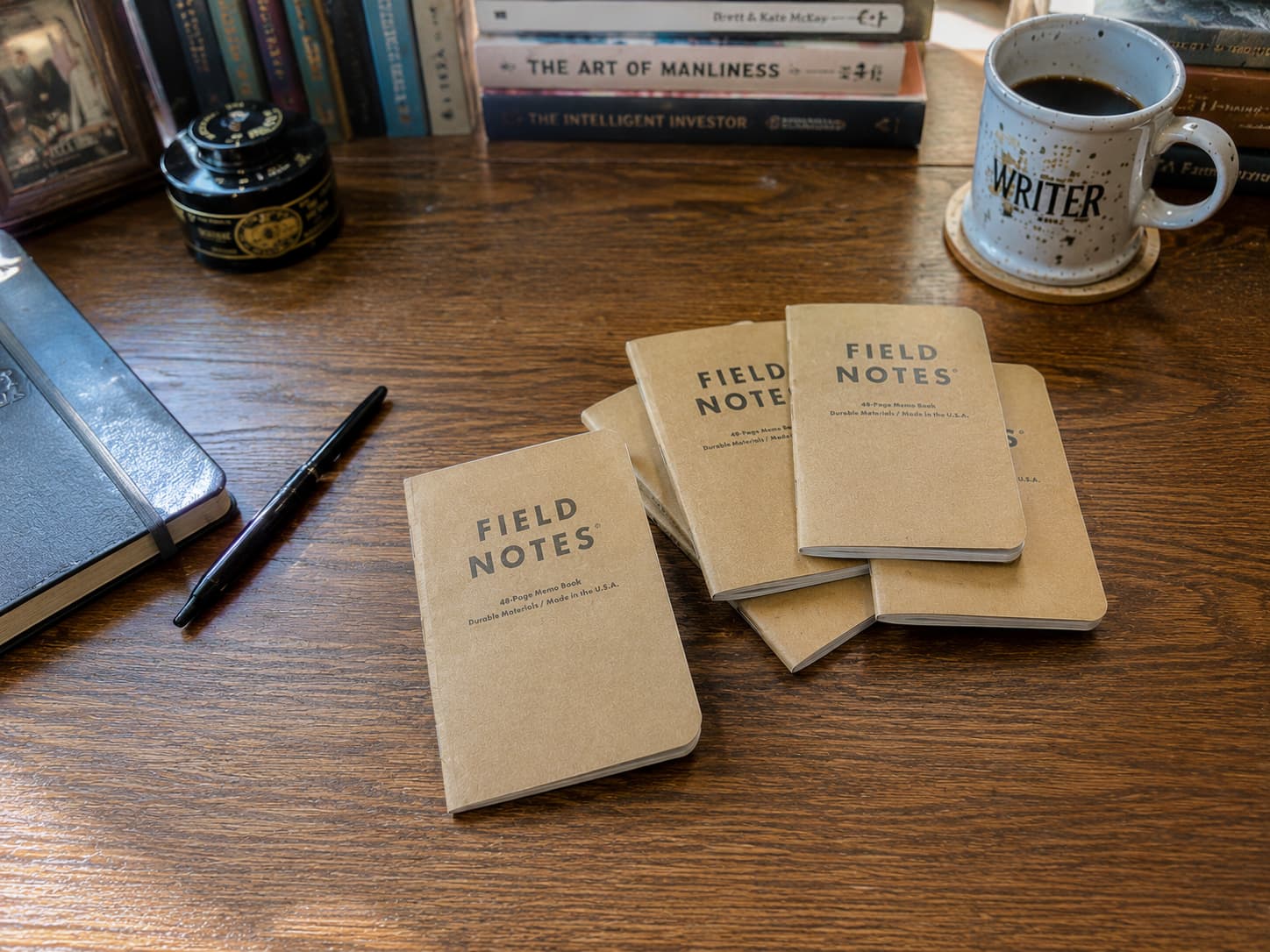
Not every daily entry needs to be a long reflection. Sometimes you just want to jot down a thought or a quote. That is where Field Notes notebooks shine. They are small, durable, and designed to be carried everywhere. The 50-page count means you go through them quickly, which is satisfying in its own way. The paper is not the best for fountain pens, but it handles a Pilot G2 or a pencil perfectly. I keep a Field Notes in my back pocket at all times for capturing ideas before they vanish.
The downside is that the binding is stapled, so the notebook does not lie completely flat. But for quick notes on the go, that is a minor trade-off.
Traveler's Notebook: The Modular System
If you prefer a more flexible system, the Traveler's Notebook offers a leather cover with replaceable inserts. You can carry a weekly planner, a lined notebook, and a sketchbook all in one cover. The inserts come in different paper types, including blank, grid, and lined. I have used a Traveler's Notebook as my main system for two years, swapping out inserts as my needs change. The leather develops a nice patina over time, and the whole setup feels personal.
The main drawback is that the inserts are small, roughly 4.3 by 6.3 inches. If you write long entries, you might find yourself flipping pages too often. But for a daily log of events or a gratitude journal, the size is perfect.
Other Brands Worth Mentioning
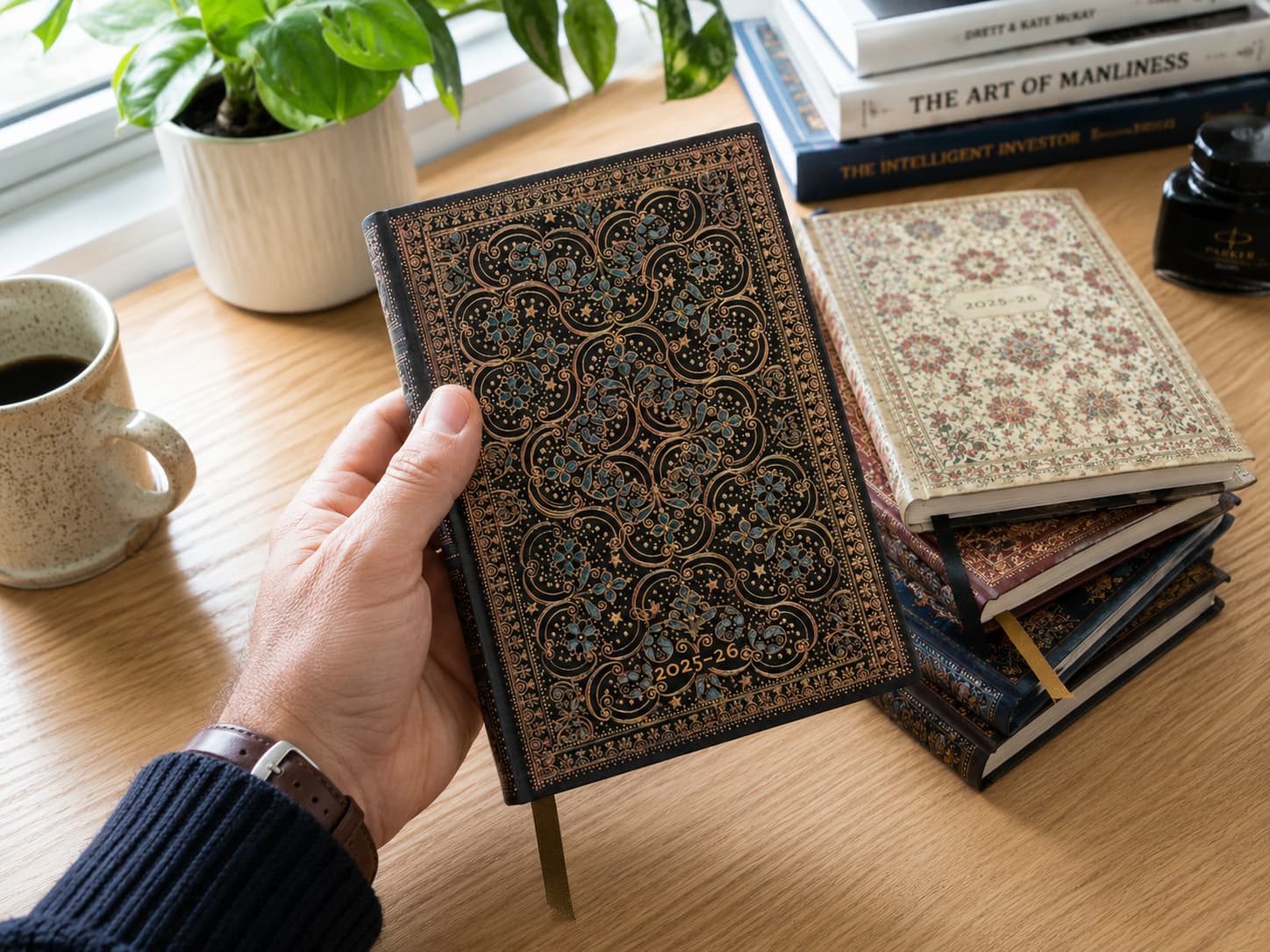
Several other brands deserve a spot in this discussion. Archer & Olive produces hardcover notebooks with 100 gsm paper that handles nearly any pen. Dingbats uses 100 gsm paper as well and has a vegan leather cover that feels nice. Paperblanks offers ornate covers that appeal to writers who want a decorative journal. Muji sells simple, affordable notebooks with surprisingly good paper for the price. Baron Fig makes minimalist notebooks with a dot grid option that works well for bullet journaling. And Exacompta produces pads with a waxy surface that is excellent for fountain pens.
I have tested all of these, and each has strengths. The Archer & Olive notebooks are great for mixed media because the paper is thick enough for light watercolor. The Baron Fig notebooks have a lovely cloth cover that makes them pleasant to handle. But for pure daily writing, I keep coming back to the ones I mentioned earlier.
How to Choose the Right Journal for You
With so many options, the best way to find your daily journal is to try one or two and see how they feel after a week. I recommend starting with a Leuchtturm1917 in A5 size. If the paper ghosts too much for your taste, switch to a Rhodia or a Clairfontaine. If you want something lighter, try a Hobonichi or a Nanami Paper notebook. If you prefer a modular system, get a Traveler's Notebook with a lined insert and a blank insert.
Your pen also matters. If you use a Lamy Safari with a fine nib, almost any paper will work. If you use a broad nib or a wet ink, you need paper like Tomoe River or Rhodia. The Pilot G2 is a reliable choice that works on most papers, so it is a safe starting point.
I have been through many notebooks, and I have made mistakes. I bought a beautiful Moleskine once and discovered the ink bled through every page. I bought a cheap spiral notebook and the pages fell out after a month. But every mistake taught me something about what I value in a journal. Now I know that paper quality matters more than cover design, and that a notebook that lies flat is worth paying extra for.
Final Thoughts
The best daily journal recommendations are the ones that get you writing. If you find a notebook that feels good, that you want to carry, and that your pen works well with, you will write more. That is the whole point. I have used Leuchtturm1917, Rhodia, Hobonichi Techo, and Field Notes for years, and each serves a different purpose. I encourage you to pick one and start. The habit matters more than the notebook. But a good notebook makes the habit easier to keep.